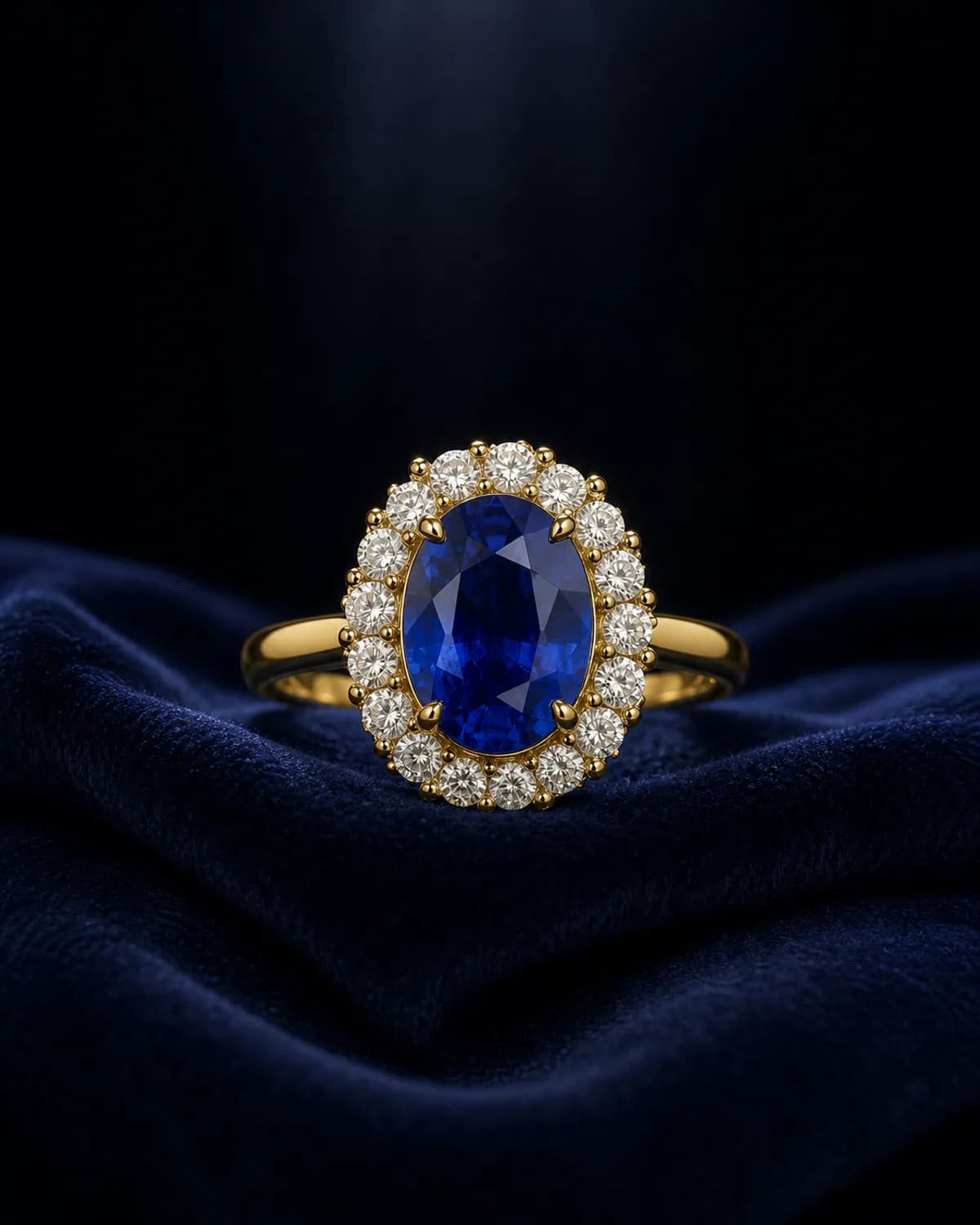
Ask ten dealers what a Ceylon blue sapphire costs and you will receive ten different answers — all of them honest. Unlike diamonds, coloured stones have no central price list. Every natural sapphire is valued on its own merits: its colour, its clarity, its cut, its weight, and above all whether nature alone made it beautiful, or man lent a hand.
This guide sets out what genuinely moves the price of a Ceylon blue sapphire, and what you should realistically expect to pay per carat in today's market.
The short answer: indicative ranges
Prices below are indicative retail ranges for faceted stones in today's market — individual stones always sit above or below them, because no two sapphires are alike.
- Commercial heated sapphires (visible inclusions, softer colour): roughly $100 – $500 per carat
- Fine heated sapphires (good colour, eye-clean): roughly $500 – $2,000 per carat
- Fine unheated, certified Ceylon sapphires: roughly $2,000 – $6,000 per carat
- Top royal blue or cornflower blue, unheated, above five carats: $8,000 – $15,000+ per carat
- Museum-grade stones at auction: far beyond any list
Colour carries most of the price
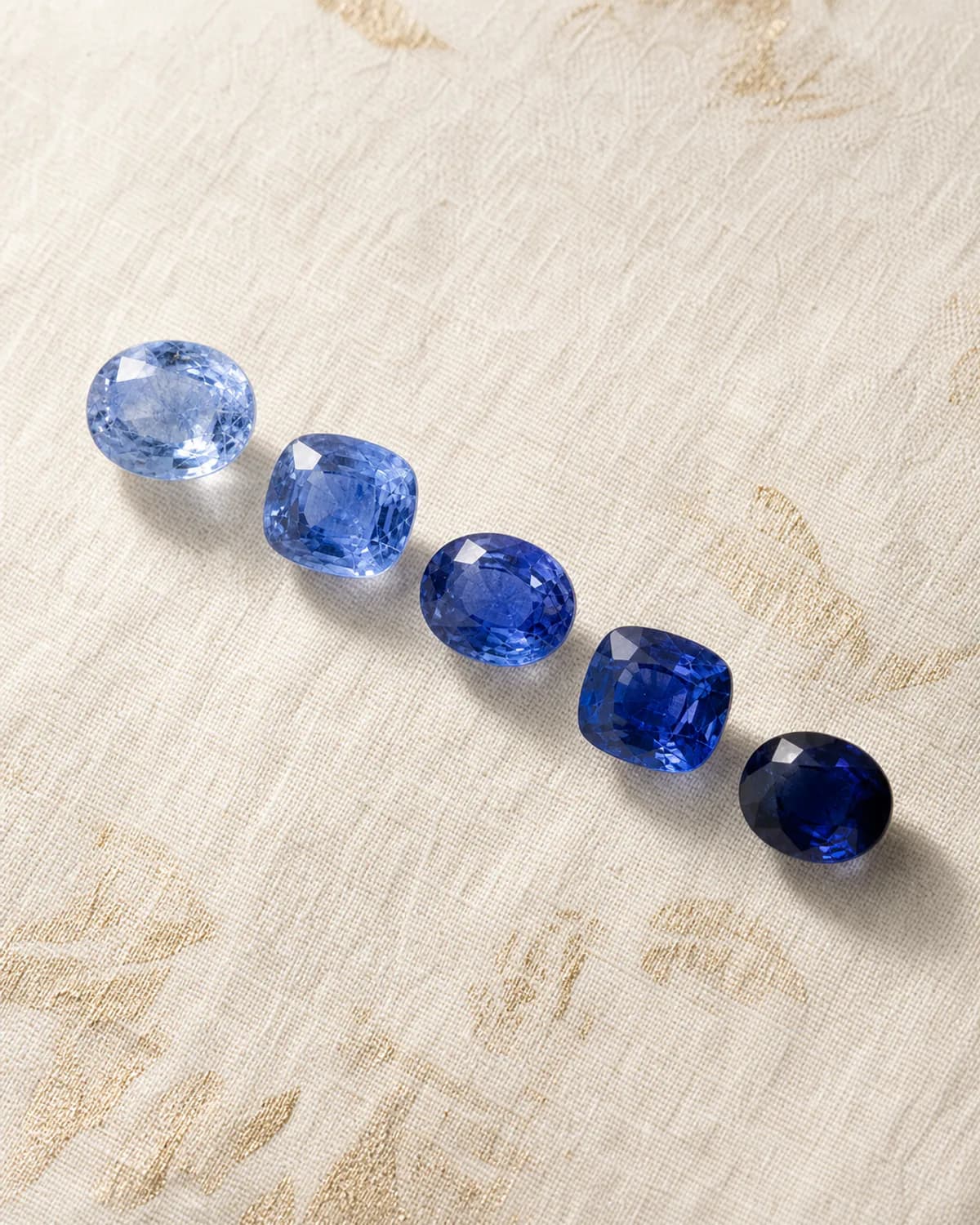
In a blue sapphire, colour is destiny — dealers often say it decides sixty per cent or more of the value. The market pays the most for vivid, saturated blues that stay alive in low light: the celebrated royal blue and the softer, velvety cornflower blue that became Ceylon's signature.
Stones that drift too dark (inky, 'midnight' blues) or too pale lose value quickly, whatever their size. A smaller sapphire with magnificent colour is worth far more per carat than a large, sleepy one.
Clarity and cut
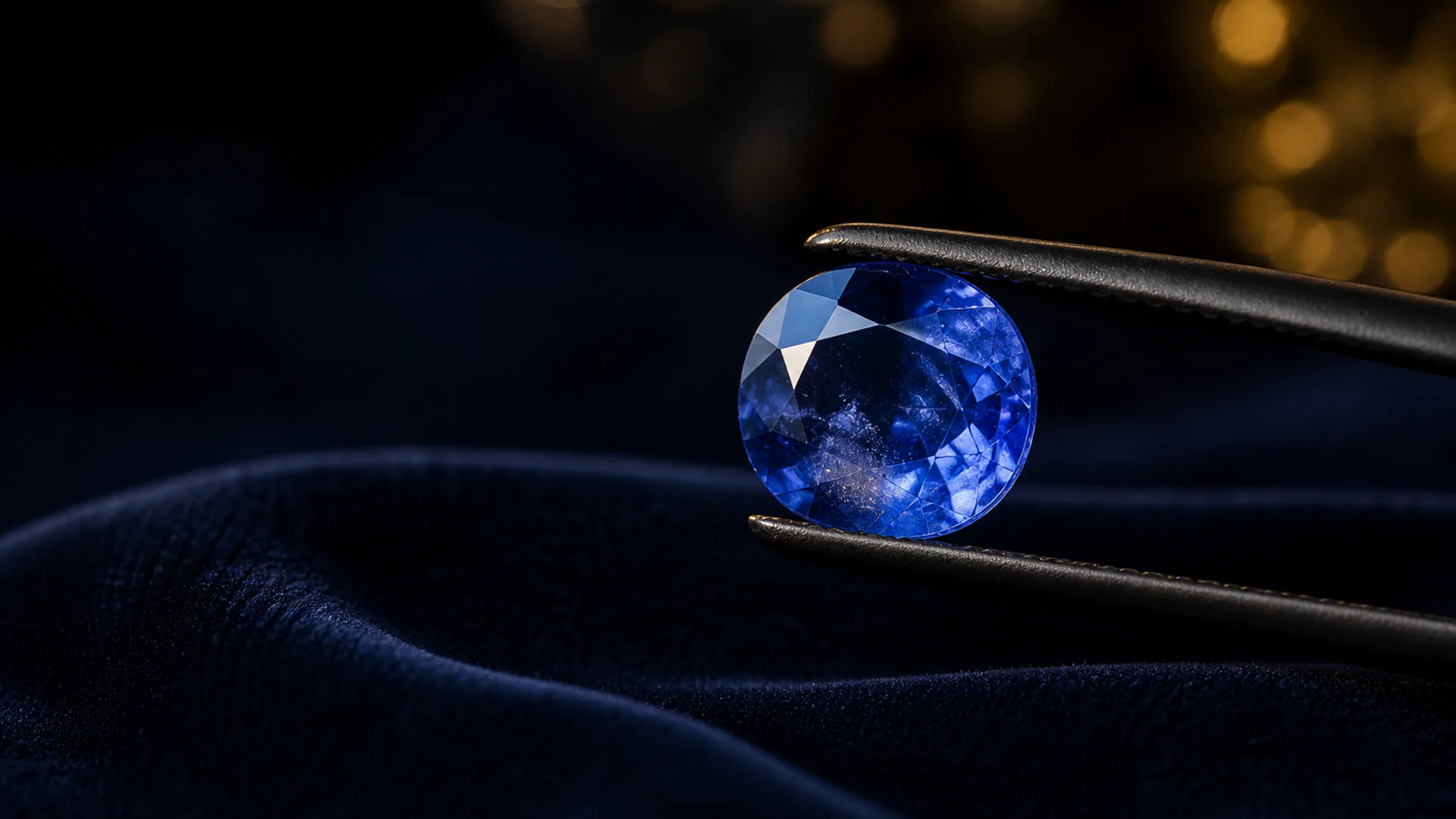
The standard for a fine sapphire is 'eye-clean': no inclusions visible to the naked eye. A whisper of rutile silk — the microscopic needles that give fine Ceylon stones their glow — is acceptable and even desirable; fractures, clouds and dark crystals are not.
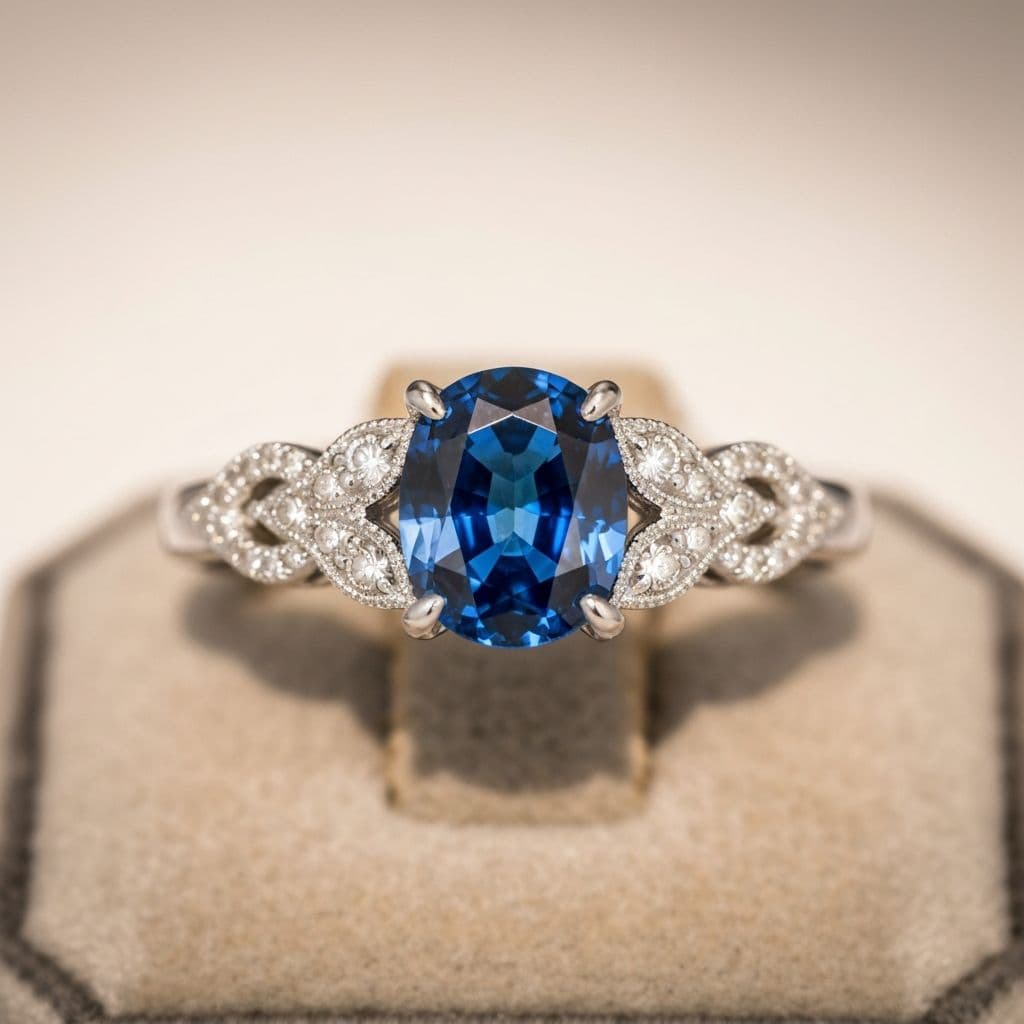
Cut matters more than most buyers expect. A well-oriented cut deepens the colour and returns light across the whole face of the stone. A poor cut leaves a pale 'window' in the centre or dark, dead areas called extinction — and a windowed stone is always cheaper for a reason.
Carat weight: the exponential curve
Sapphire prices do not rise in a straight line with size — they climb in steps. Clean, fine rough gets rarer at every threshold, so the price per carat itself jumps as a stone passes two, three, five and ten carats. A fine five-carat stone is worth much more than five times a one-carat stone of the same quality.
Ceylon's ancient gravels are famous for yielding unusually large, clean crystals, which is why the island has produced so many record-breaking stones — and why fine large Ceylon sapphires remain comparatively attainable.
Heated vs unheated: the biggest single premium
Most sapphires on the market have been heated to improve their colour — an accepted practice when disclosed. A stone that is beautiful with no treatment at all is a different class of rarity, and the market prices it accordingly: expect an unheated premium of thirty to fifty per cent or more, rising sharply for top colours.
This is why the certificate matters as much as the stone. Only an independent laboratory report can confirm 'no indications of heating'.
Does the Ceylon origin change the price?
Origin is provenance, and provenance carries a premium. Ceylon sapphires are prized for a bright, open blue that needs no apology in daylight, backed by two thousand years of unbroken trade. Kashmir and Burmese stones command the highest origin premiums of all, but fine Ceylon material offers the best balance of beauty, size and value of any classic origin.
How to buy well at any budget
Whatever you spend, the same rules protect you:
- Prioritise colour and cut over size — a lively stone outperforms a large one
- Insist on an independent laboratory certificate stating origin and treatment
- Judge the stone in daylight, not under showroom spotlights
- Buy the best unheated stone your budget allows rather than the biggest
- Choose a stone you love looking at — stones with 'life' are always the easiest to sell on
Every Ceylon blue sapphire we offer is natural, independently certified, and priced stone by stone — never by a formula. Browse the collection, or ask our gemologists for current stones in your budget.
See the stones for yourself
Natural, untreated, independently certified — every stone in our collection is one of one.