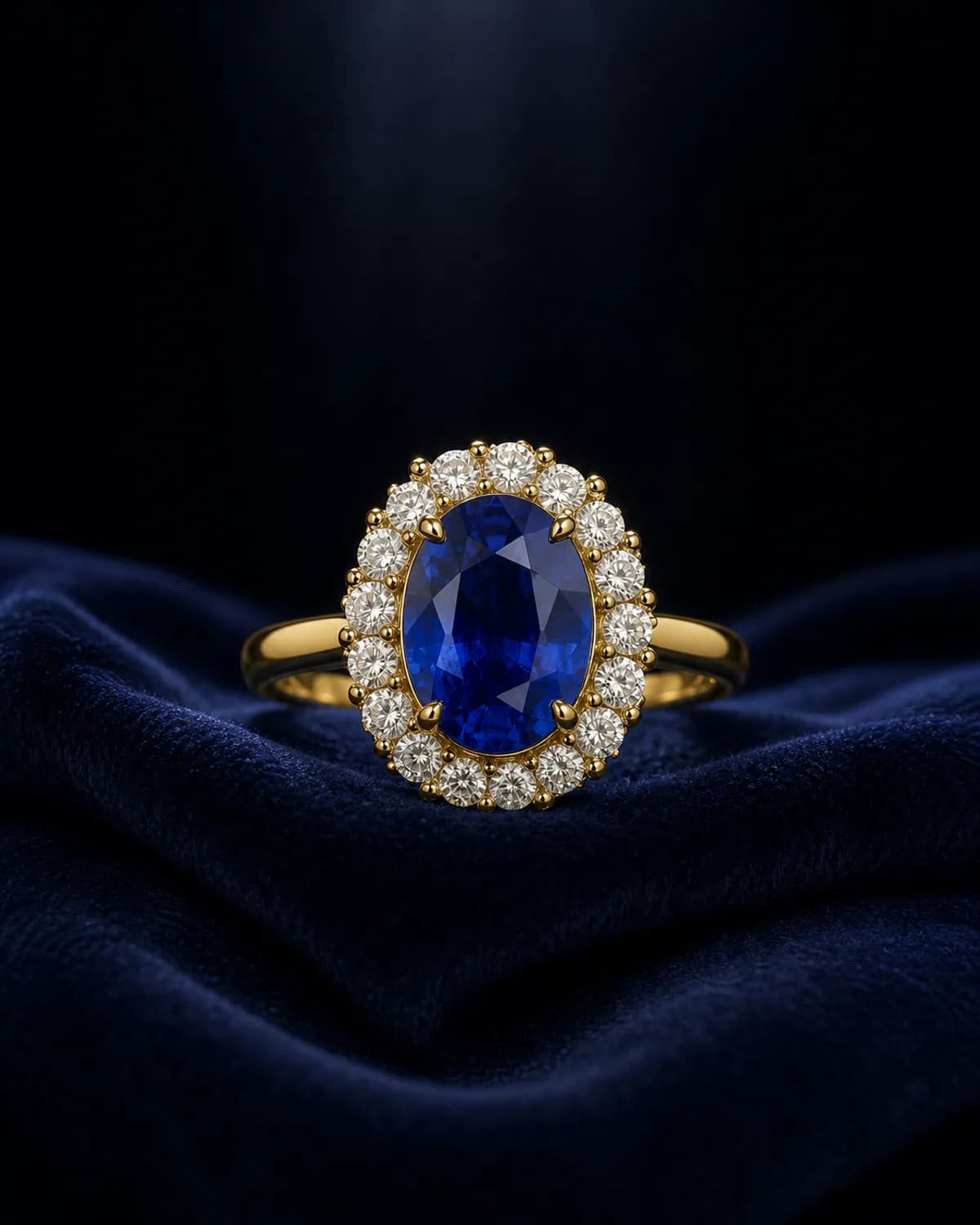
In 1981, a young Lady Diana Spencer chose her own engagement ring from the Garrard catalogue: a 12-carat oval Ceylon blue sapphire ringed with diamonds. It was not custom-made, not a royal heirloom — anyone could buy one. The world promptly fell in love with it.
Today that ring sits on the hand of the Princess of Wales, and it remains the most famous engagement ring in existence. It also settled a question for generations of couples: yes, a sapphire makes a magnificent engagement ring. Here's why — and how to choose yours.
The ring that started it all
Diana's choice was quietly radical. Diamonds were the default; a coloured stone — and one chosen from a catalogue at that — was entirely her own decision. The deep Ceylon blue became her signature, copied by jewellers on every continent within months.
When the ring passed to Catherine, Princess of Wales, in 2010, demand for Ceylon sapphire engagement rings surged all over again. Four decades on, 'the Diana ring' is still the design we're asked about most.
Why sapphire works for a lifetime of wear
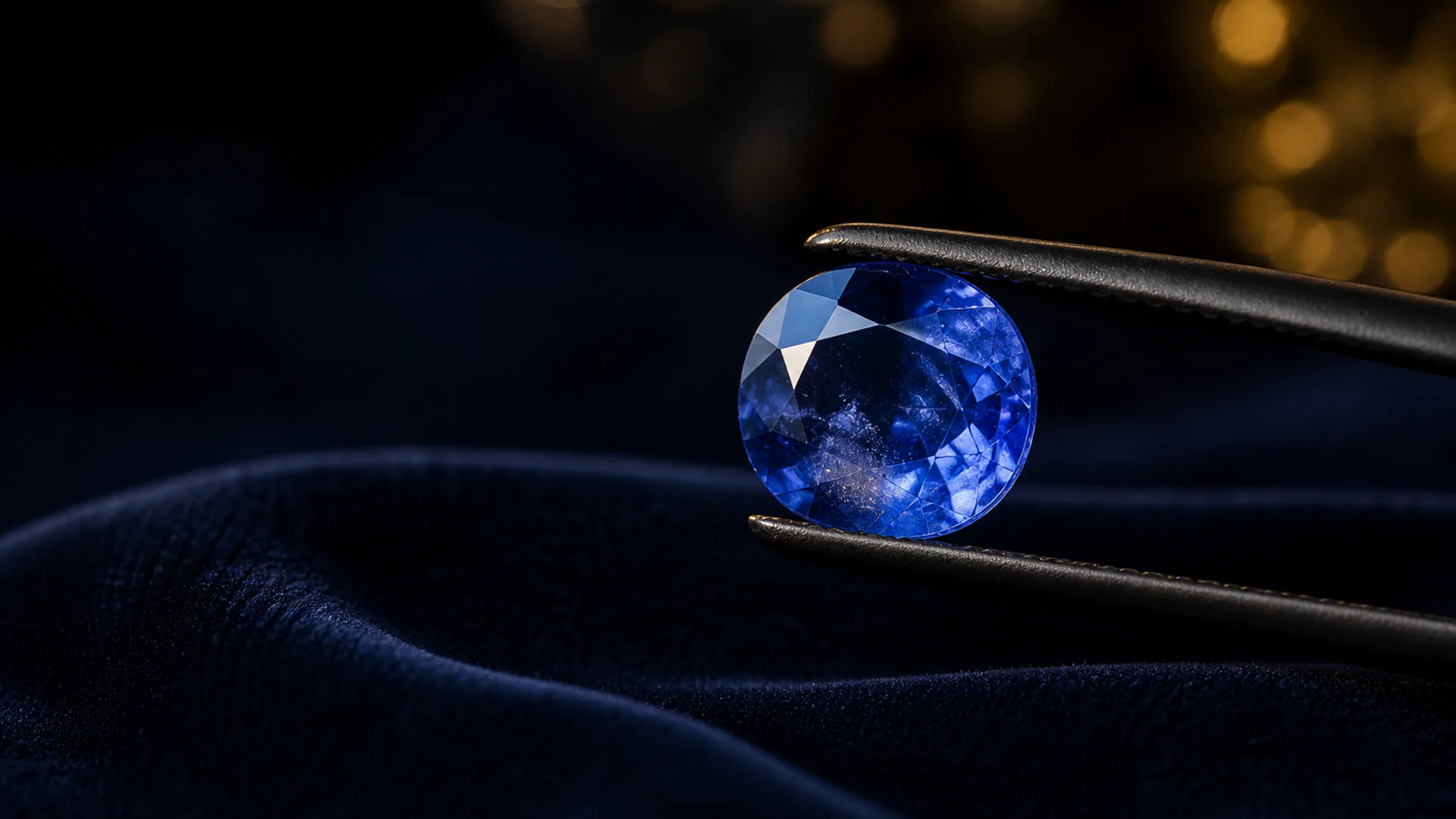
An engagement ring lives a hard life — knocked against desks, doors and dumbbells every day for decades. Sapphire is one of the very few gems equal to it: at 9 on the Mohs scale it is the hardest natural gemstone after diamond, with excellent toughness and no cleavage plane to split along.
Softer beauties — emerald, tanzanite, opal — demand caution. A well-cut blue sapphire simply asks to be worn.
Choosing your stone
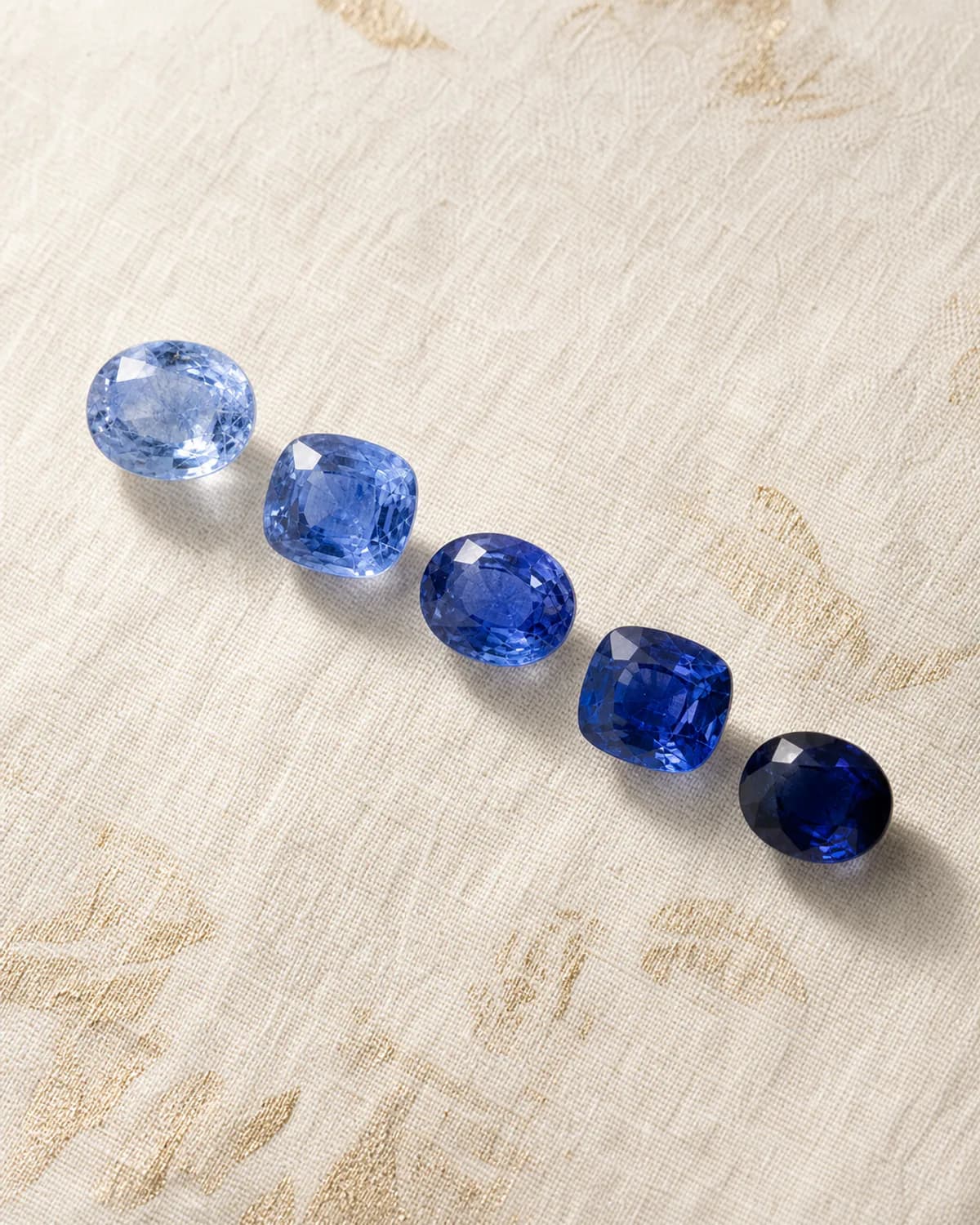
Choose colour first. The most-loved engagement sapphires are vivid royal blue or bright cornflower blue — lively stones that hold their colour in candlelight as well as sunshine. Oval and cushion cuts dominate, flattering the finger and protecting weight; round and emerald cuts are rarer and quietly striking.
Most engagement sapphires sit between one and three carats, where fine quality remains within reach. Because a sapphire's price is driven by colour rather than sheer size, a superb one-and-a-half carat stone will always outshine a mediocre three.
Settings that flatter blue
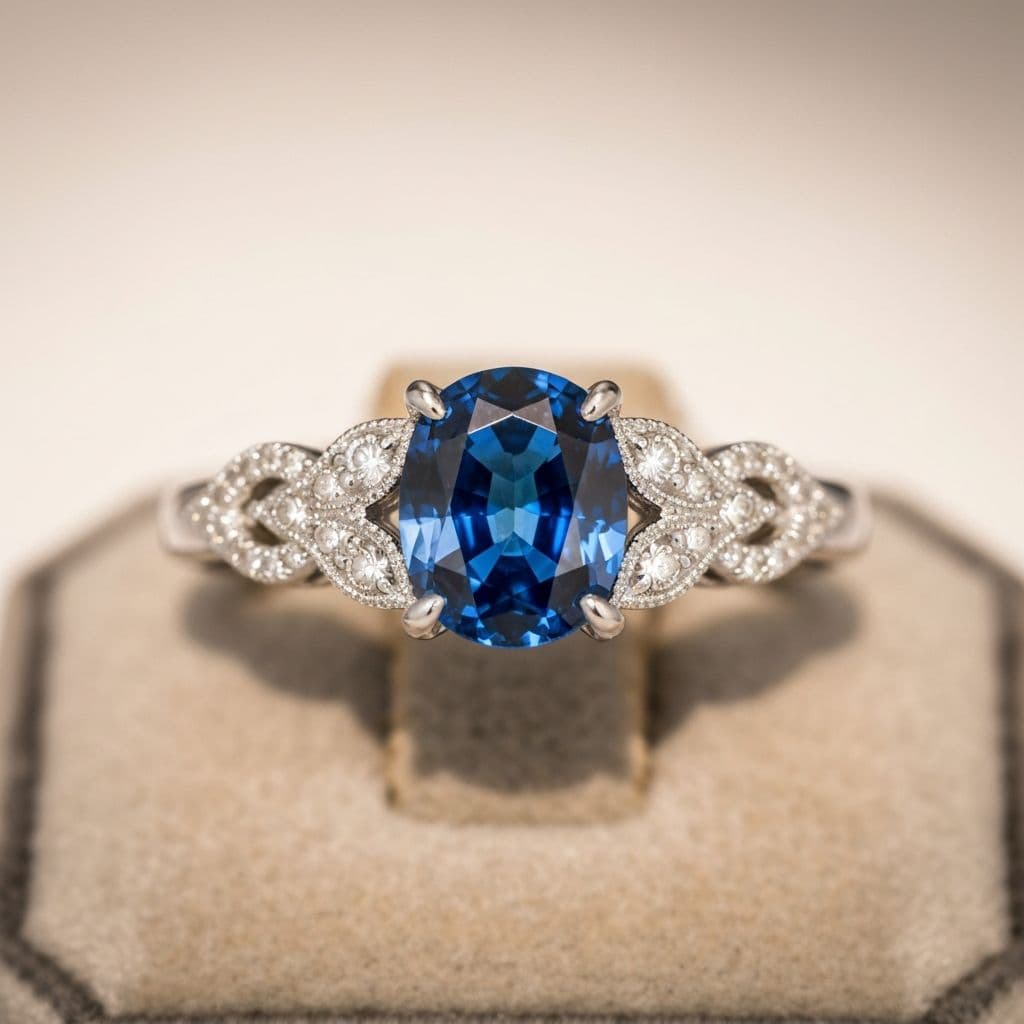
Blue sapphire is famously generous — it suits nearly every design:
- The halo — diamonds around the centre stone, Diana-style; maximises presence per carat
- The trilogy — a sapphire flanked by two diamonds; balanced and symbolic
- The solitaire — the stone alone on a clean band; confident and modern
- Yellow gold warms royal blue; platinum and white gold make cornflower blues look cooler and brighter
Sapphire versus diamond
A diamond engagement ring is a convention; a sapphire is a decision. Blue has symbolised fidelity and sincerity for centuries — which is precisely why royalty chose it. Practically, too, carat for carat a fine blue sapphire delivers far more presence and individuality for the same budget, and no two are ever alike.
The bespoke route
The surest way to a ring you'll love forever is to choose the loose stone first, then design the setting around it. You see the sapphire exactly as it is — its colour, its character, its certificate — and the finished ring is one of one, like the stone itself.
We supply natural, certified Ceylon blue sapphires for engagement rings and work with trusted setters to bring the design to life. Start with the stone — we'll help with everything after.
See the stones for yourself
Natural, untreated, independently certified — every stone in our collection is one of one.