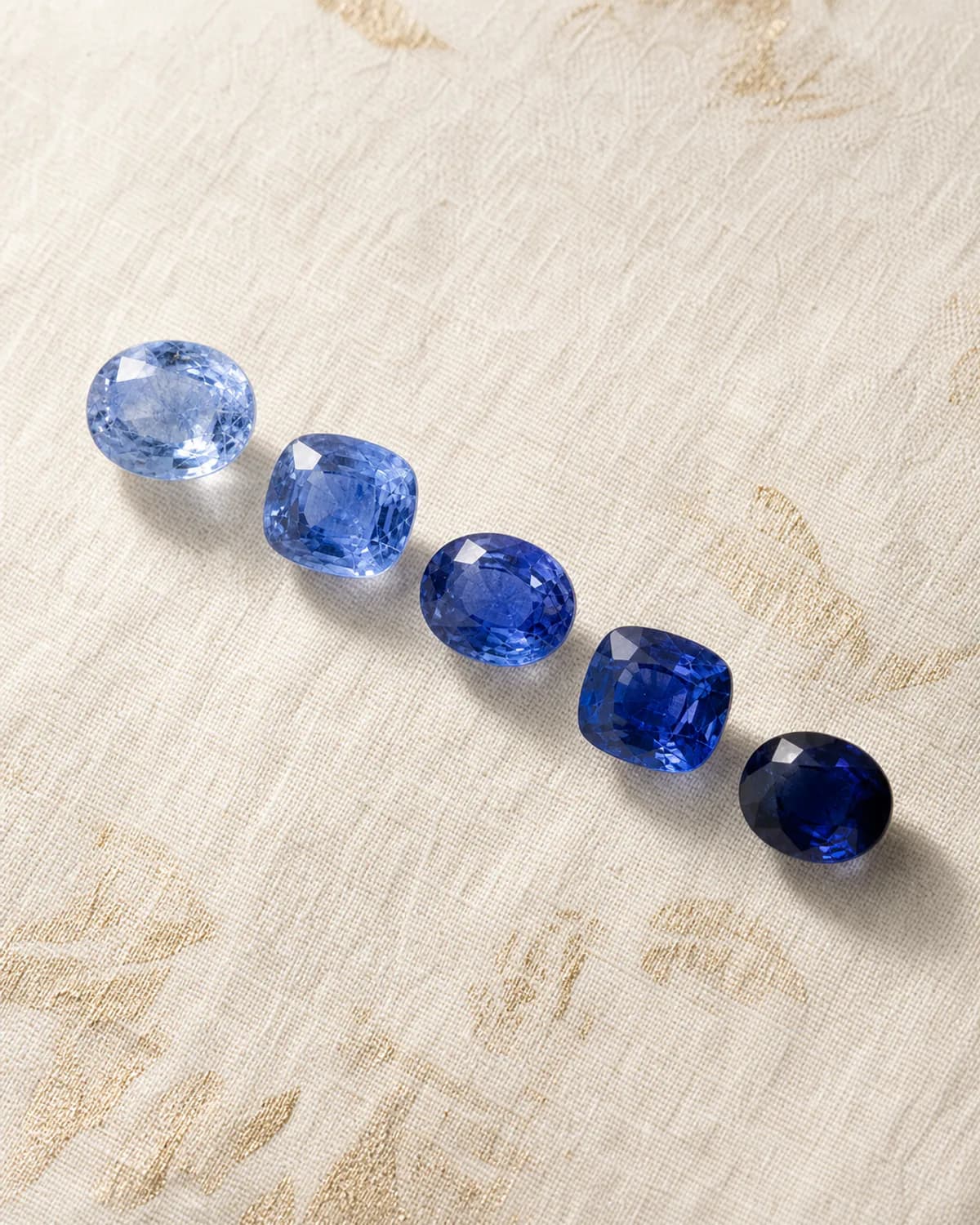
Somewhere between nine and nine-and-a-half out of every ten sapphires sold today have been heated. It is the single most common treatment in the coloured gemstone world — and the single most misunderstood.
Understanding what heating is, what it does to value, and how it differs from treatments you should refuse is the most important knowledge a sapphire buyer can have.
What heat treatment actually is
Heating is exactly what it sounds like: a natural sapphire crystal is taken to high temperatures — historically over a charcoal blowpipe in Ceylon, today in controlled electric furnaces — to dissolve fine rutile silk and improve the colour and clarity nature gave it. Nothing is added to the stone; it remains natural corundum, rearranged by heat.
The practice is over a thousand years old. Sri Lankan traders were heating pale 'geuda' sapphires into fine blues centuries before gem laboratories existed.
Why heat at all?
Because truly beautiful rough is vanishingly rare. Gentle heating can turn a milky, sleepy stone into a transparent, vivid one — putting far more beauty within reach of far more people. Without heat treatment, the world simply could not supply a fraction of the sapphire jewellery it sells.
Does heating make a sapphire 'fake'?
No. A heated sapphire is a natural sapphire, and heat treatment is accepted throughout the trade — provided it is disclosed. The stone is not synthetic, not assembled, not dyed. It was mined from the earth exactly as you see it; only its colour has been encouraged along.
Disclosure is the operative word. A heated stone sold as unheated is fraud; a heated stone sold honestly is simply a different, more affordable product.
The value question
Heat explains the widest price gap in the sapphire world. When a stone emerges from the ground already vivid and clean — no furnace required — it belongs to a tiny, finite class. Collectors and investors compete for that rarity, so fine unheated sapphires routinely command thirty to fifty per cent more than equivalent heated stones, and the gap widens as quality and size increase.
Unheated stones have also historically held their value best, precisely because supply can never increase: the earth made a limited number of them.
Treatments you should refuse outright
Gentle heat is one thing. These are another — and reputable dealers do not sell them without explicit, prominent disclosure:
- Beryllium diffusion — beryllium is driven into the stone at extreme heat to alter colour; far cheaper, and it must be declared
- Glass or fracture filling — fissures filled with lead glass; the stone is effectively part glass
- Lattice diffusion and dyeing — surface colour that can scratch or wear away
- Synthetic corundum sold as natural — laboratory-grown, worth a small fraction of a mined stone
Can you tell by eye?
No — and anyone who claims otherwise is guessing. Heating leaves microscopic evidence: altered inclusions, dissolved silk, stress halos around crystals. Detecting it reliably takes a gemmological laboratory.
This is why the certificate is not paperwork but protection. An independent report stating 'no indications of heating' is the only proof an unheated sapphire is what it claims to be.
Our position is simple: we deal in natural Ceylon sapphires, the great majority entirely unheated, every stone independently certified with its treatment status disclosed in writing. Ask to see the report before you fall in love with the stone — any honest seller will hand it over.
See the stones for yourself
Natural, untreated, independently certified — every stone in our collection is one of one.